


Promising VR applications in the health sector
Virtual Reality (VR) in Healthcare: An Exploration of Emerging Use Cases
Virtual reality is a fast-evolving technology with a growing range of promising applications in medicine.
VR platforms allow users to immerse themselves in a fully interactive 3D environment, creating experiences that feel more engaging and lifelike than traditional digital tools. As a result, an increasing number of publications have explored how VR can be used in healthcare.
The role of VR in pain management and rehabilitation has been widely studied. Research suggests that VR can reduce patient-perceived pain levels 1 and reduce anxiety associated with medical procedures 2. VR rehabilitation therapy can also simulate real-life situations to improve physical function 3 in patients recovering from stroke or other medical conditions.
VR technology can also incorporate meditation, cognitive behavioural therapy, and mindfulness 4, highlighting how these often underappreciated “soft” concepts in modern medicine can contribute to “hard” clinical outcomes.
As VR continues to enter everyday clinical practice, it has the potential to make care more robust, patient-centred, and safe.
Introduction
VR in healthcare spans a wide range of specialties and supports both patients and clinicians. Below are some current and emerging applications of VR technology in healthcare:
Pain Distraction and Management:
VR for Pain Relief:
Patients undergoing painful procedures, such as wound care or physical therapy, can use VR as a distraction tool to help reduce pain and anxiety.
Chronic Pain Management:
VR experiences designed around relaxation and mindfulness may help people manage chronic pain conditions.
Preoperative and Pre-procedural Anxiety Reduction:
Virtual Tours and Preparation:
Patients can take virtual tours of medical facilities or procedure rooms to become more familiar with the environment and reduce anxiety before surgery or other medical procedures.
Distraction and Mindfulness:
Patients can use VR to visit calm, peaceful virtual spaces that help distract them during upcoming or ongoing procedures.
Rehabilitation and Physical Therapy:
Virtual Exercise Programs:
VR can guide patients through interactive rehabilitation exercises, making physical therapy more engaging and motivating.
Monitoring Progress:
Healthcare providers can monitor patient progress in real time through VR applications and adjust rehabilitation plans accordingly.
Cognitive Rehabilitation:
VR Cognitive Exercises:
Patients recovering from stroke or traumatic brain injury can complete VR-based cognitive exercises to improve memory, attention, and problem-solving skills.
It is still early days for VR, but virtual reality is already showing strong potential for integration into everyday healthcare practice. As more solutions are developed and implemented around the world, more patient-centred experiences and outcomes will continue to emerge.
Virtual reality is a fast-evolving technology with several promising applications in the health sector, offering immersive and interactive 3D experiences.
Definition of key terms and concepts used in VR
Virtual Reality (VR): An immersive virtual world experience that uses a headset to replace the user’s view of the surrounding environment with a simulated, interactive 3D space.
Headset: A headset, or head-mounted display (HMD), is a device worn on the head that includes one or two displays positioned in front of the wearer’s eyes so they can experience virtual reality. A well-known example is the Meta Quest 2 VR headset.
Head tracking: In VR, head tracking refers to an application’s ability to detect and respond to a user’s head movements. This is what allows users to look around a virtual environment in a way that feels similar to real life.
Immersion: In VR, immersion refers to the feeling of being fully present inside a virtual environment. Greater immersion helps users feel as though they are part of the experience rather than simply observing it.
Gesture: Any bodily motion used to control or influence VR content is called a gesture. A user might use a handheld controller or, on hand-tracking devices, wave a hand at a virtual door to open it or lean forward to simulate walking.

RECOMMENDED DEVICE
VR HEADSET (Meta Quest 2 or ideally Meta Quest 3, plus Elite Strap, battery pack, and carry case)
Our current recommendation is either a Meta Quest 2 or, ideally, a Meta Quest 3. The Quest 3 offers noticeably sharper resolution, is lighter to wear, and our VirtReal application works with hand and gesture controls, so there is no need for controllers. We typically purchase these through Amazon; if helpful, here is a link to purchase the device.
References:
-
Spiegel B, Fuller G, Lopez M, Dupuy T, Noah B, Howard A, et al. (2019) Virtual reality for management of pain in hospitalized patients: A randomized comparative effectiveness trial. PLoS ONE 14(8): e0219115. https://doi.org/10.1371/journal.pone.0219115
-
Smith V, Warty R, Sursas J, Payne O, Nair A, Krishnan S, da Silva Costa F, Wallace E, Vollenhoven B
The Effectiveness of Virtual Reality in Managing Acute Pain and Anxiety for Medical Inpatients: Systematic Review
J Med Internet Res 2020;22(11):e17980
URL: https://www.jmir.org/2020/11/e17980
DOI: 10.2196/17980 -
Schultheis, M. T., & Rizzo, A. A. (2001). The application of virtual reality technology in rehabilitation. Rehabilitation Psychology, 46 (3), 296–311. https://doi.org/10.1037/0090-5550.46.3.296
-
Raluca IGNA, Simona Ş TEFAN, Ioan ONAC, Ioana ONAC, Rodica-Ana UNGUR, Aurora SZENTAGOTAI TATAR (2014). MINDFULNESS-BASED COGNITIVE-BEHAVIOR THERAPY (MCBT) VERSUS VIRTUAL REALITY (VR) ENHANCED CBT, VERSUS TREATMENT AS USUAL FOR CHRONIC BACK PAIN. A CLINICAL TRIAL, Journal of Evidence-Based Psychotherapies Vol. 14, No. 2, September 2014, 229–247. https://www.researchgate.net/profile/Simona-Stefan-4/publication/281874877_Mindfulness-based_cognitive-behavior_therapy_MCBT_versus_virtual_reality_VR_enhanced_CBT_versus_treatment_as_usual_for_chronic_back_pain_A_clinical_trial/links/5a54b24d0f7e9b205de2e7c3/Mindfulness-based-cognitive-behavior-therapy-MCBT-versus-virtual-reality-VR-enhanced-CBT-versus-treatment-as-usual-for-chronic-back-pain-A-clinical-trial.pdf
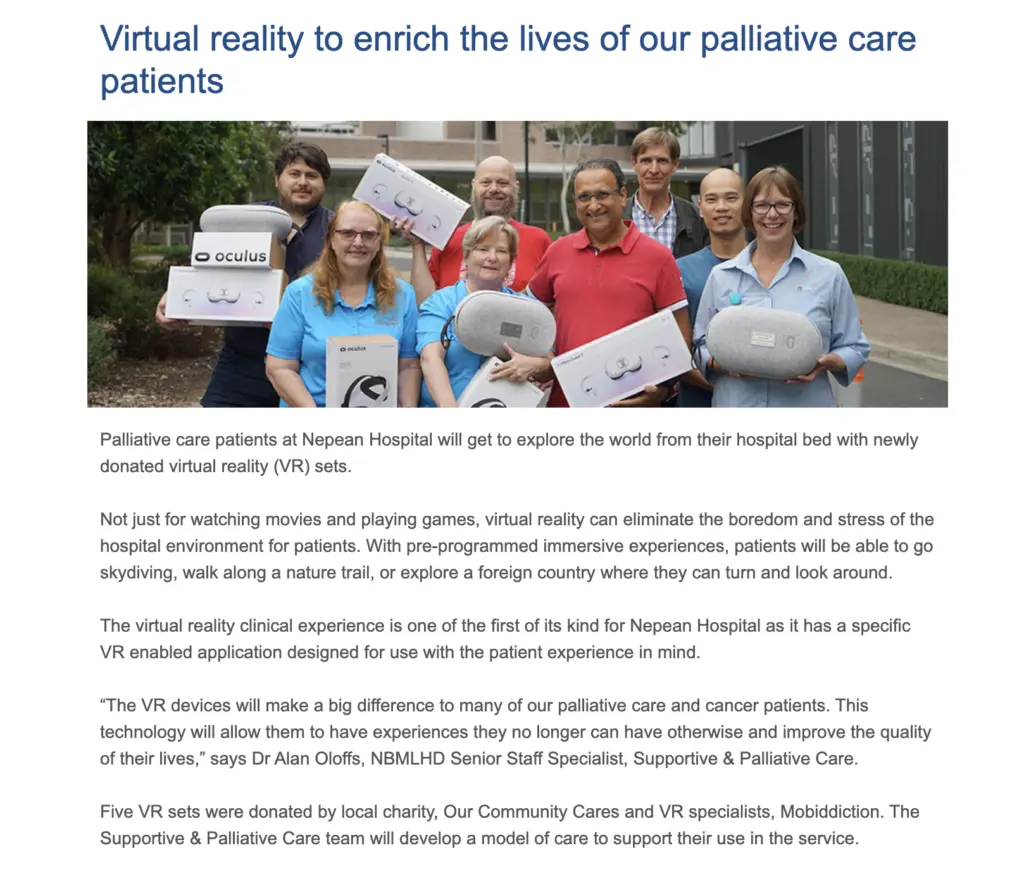
Mobiddiction is currently trialling virtual reality in hospitals, including the testing of our VirtReal platform at Nepean Hospital, part of the Penrith and Blue Mountains LHD. You can find out more about it here . Our patient VR platform, VirtReal , is constantly evolving as we gather feedback and refine it for new ways patients can interact with and benefit from VR in healthcare.
Please get in touch if you have any questions about our Digital Patient VR program.
More reading
 uncategorized
PatientVR PRO Uses Meta for Work Managed Devices
Virtual Reality (VR) is rapidly moving beyond entertainment and gaming into meaningful healthcare applications, supporting patient wellbeing, relaxation, pain management, rehabilitation, and improved care experiences.
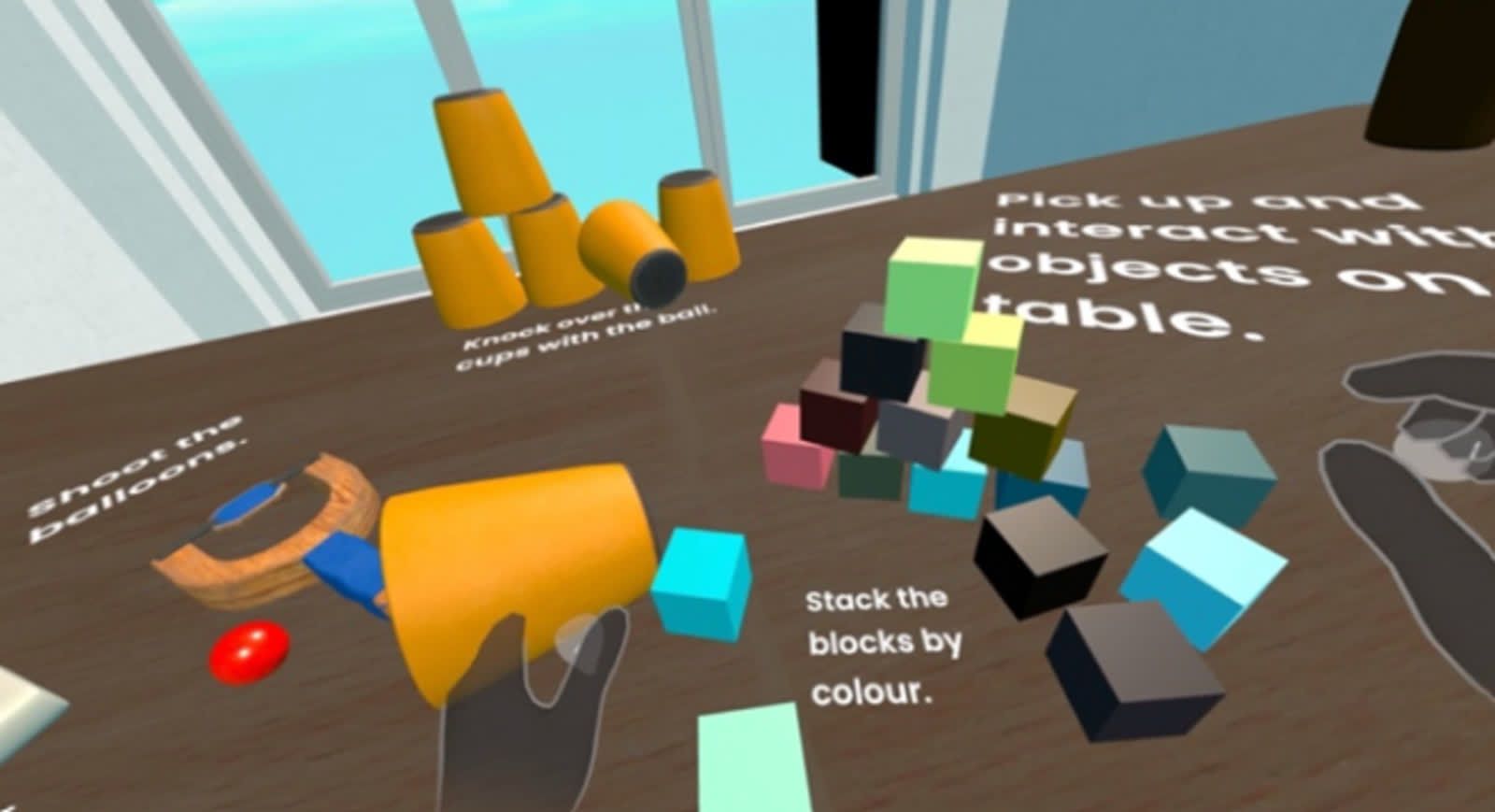
Interact: OBJECTS
A gentle, interactive virtual experience where patients can stack, move, and explore familiar objects in a calming environment designed to support light movement, cognitive engagement and emotional well-being.
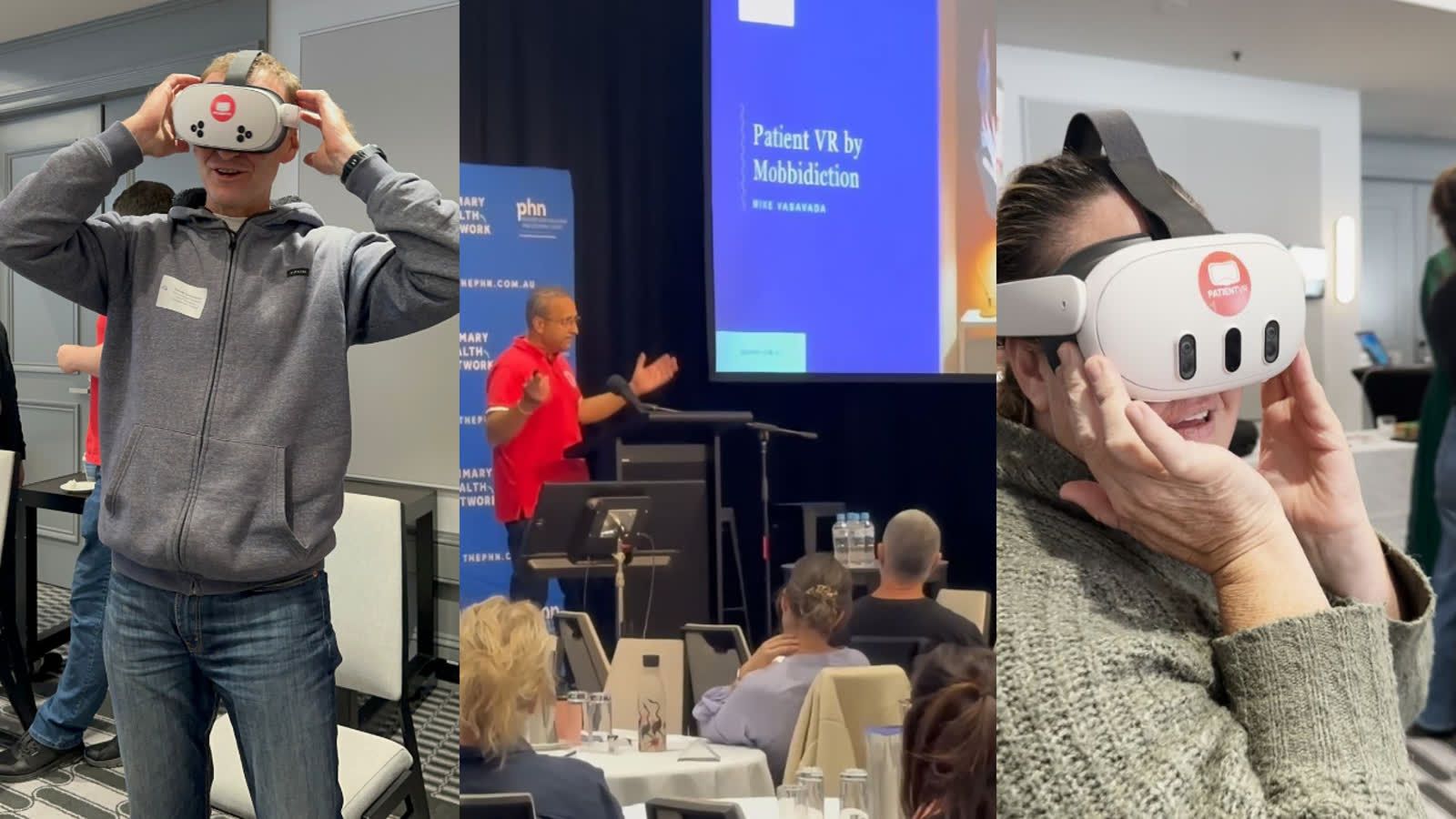
PHN’s Palliative and End-of-Life Care Symposium – Central Coast 2026
PHN’s Palliative and End-of-Life Care Symposium – Central Coast 2026 is a leading healthcare event focused on advancing palliative care in Australia through innovation, collaboration, and patient-centred approaches.